How to Order Steak in Melbourne
To order steak well, match the cut to what you want: porterhouse for a firm bite and a rendered fat cap, scotch fillet for richness, eye fillet for tenderness. Order medium-rare unless you have a reason not to, and take highly marbled beef in smaller portions.

Start with what you actually want
Most people order steak by price or by habit. Both are poor guides, because the cuts do genuinely different things and the most expensive one is not the best one for every appetite.
Three questions settle it. Do you want to chew, or do you want it to give way? Do you want rich, or do you want clean beef flavour? And how hungry are you, honestly?
H2 The cuts, and what each one does
Porterhouse (also called sirloin, or New York strip)
From the back of the animal, along the spine. It has a firm texture, a decent chew, and a strip of fat along one edge that renders over high heat into something close to caramel.
It is the cut that shows most clearly what a grill is doing, which is why it is the default recommendation at any restaurant cooking over fire. If you are ordering one thing and want to know whether the kitchen is any good, order this.
Scotch fillet (ribeye)
From the rib section. More marbling than porterhouse, which means richer, more forgiving, and harder to ruin by cooking it a little longer than intended.
It has a distinct cap of muscle around the outside — the spinalis — that many people consider the best mouthful on the animal. If your scotch fillet arrives with that cap intact, eat it last.
Eye fillet (tenderloin, filet mignon)
The least-worked muscle on the animal, and therefore the most tender. It is also the leanest, which means the least flavour, which is why it is so often served with a sauce or wrapped in something.
Order it if texture matters more to you than beef flavour, or if you want a steak that requires no effort. Do not order it expecting the biggest taste.
Rump
Firmer, cheaper, and considerably more flavourful than its price suggests. It punishes overcooking and rewards resting. A good rump at medium-rare beats a mediocre scotch fillet, and most menus underprice it.
T-bone and bone-in cuts
A T-bone is porterhouse and eye fillet either side of a bone, which is why it costs what it does and why it is difficult to cook evenly. The bone conducts heat differently and the two muscles want different treatment.
Order it for the theatre and the two textures, not because it is objectively better.
Flank, skirt and the cheaper cuts
Worked muscles with coarse grain and a great deal of flavour. They need either fast high heat or long slow cooking, and nothing in between, and they must be sliced across the grain or they are unchewable.
A restaurant that puts these on the menu and handles them properly is usually a restaurant worth returning to, because they are harder to get right than an eye fillet.
H2 Doneness, and why medium-rare is the default
Medium-rare sits around 52 to 55°C at the centre. At that point the fat has begun to render and the muscle fibres have not yet tightened and squeezed out their moisture.
Rare is roughly 48 to 52°C, medium 55 to 60°C, medium-well 60 to 65°C, and well done above that. Food Standards Australia New Zealand notes that whole cuts of beef carry bacteria on the surface rather than throughout, which is why a seared steak served pink is treated differently from mince.
If you want it well done, order it well done — nobody in a decent restaurant will judge you. But choose scotch fillet or rump rather than eye fillet, because the marbling gives you some protection against the extra time.
H2 Marble score, translated
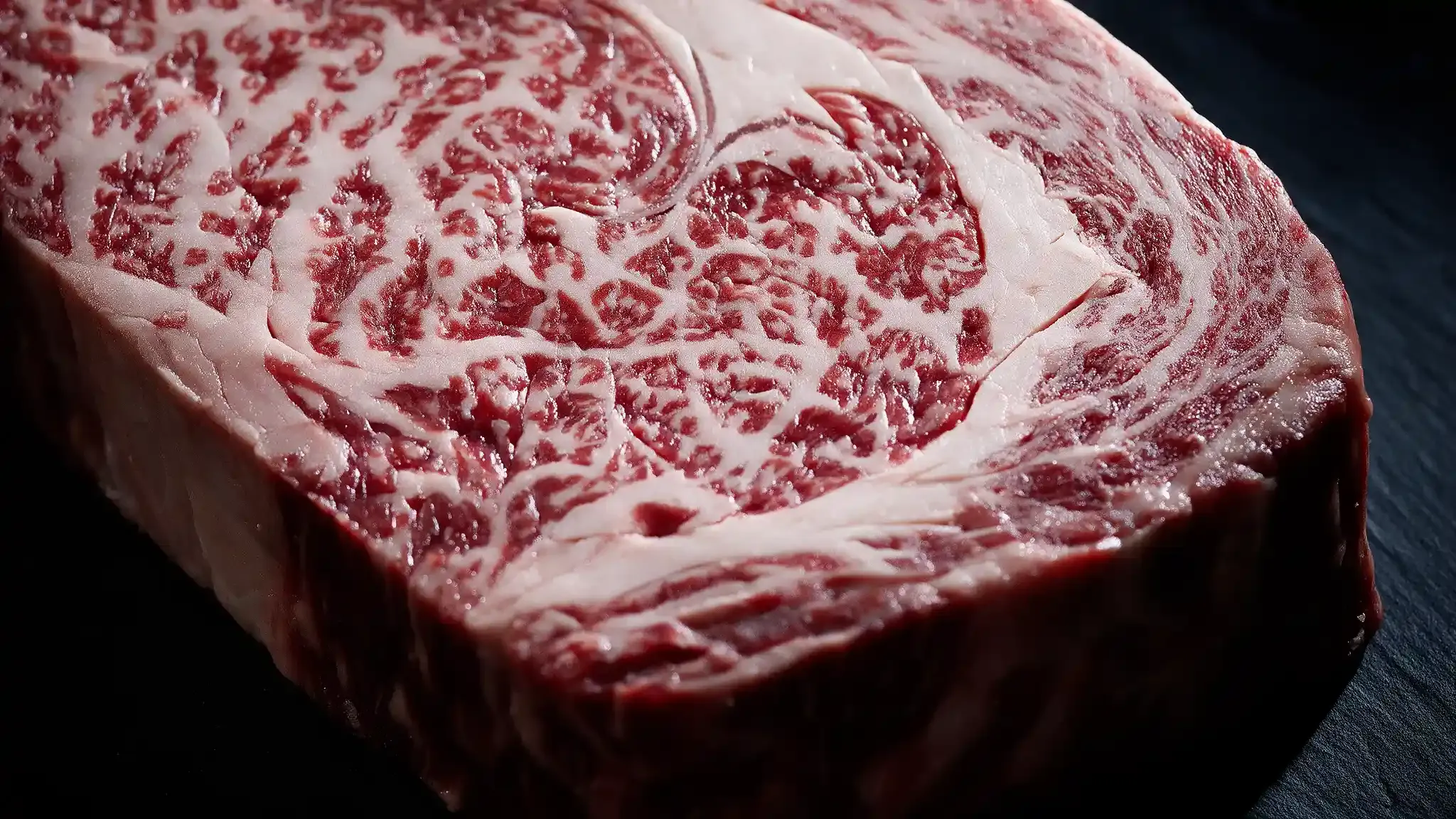
Marbling is the intramuscular fat running through a cut. In Australia the AUS-MEAT scale runs from 0 to 9+, in increments of one, where 0 is essentially no visible marbling and 9+ is the richest wagyu.
There is a second system. Meat Standards Australia, run by Meat & Livestock Australia, grades by cut and cooking method rather than by whole carcass, and its marbling scale runs from 100 to 1190 in increments of ten. An AUS-MEAT score of 5 typically corresponds to somewhere around MSA 700 to 800.
The practical translation: higher is richer, not automatically better. Plenty of people prefer the cleaner flavour of a grass-fed steak at marble score 3 or 4 to something considerably more marbled.
The most common wagyu mistake
Order less of it than instinct suggests. Marbling coats the palate, so a 200g highly marbled steak eats like a 350g lean one. The people who order the largest wagyu on the menu are reliably the people who leave a third of it.
H2 Grass-fed or grain-fed
Grass-fed beef is leaner with a more mineral, direct flavour. Grain-fed is richer and more marbled, because grain finishing puts fat through the muscle.
Neither is better. It is a preference, and anyone who tells you otherwise is selling something.
H2 Wood, charcoal or gas
Gas is consistent and easy to run through a service. Charcoal burns steady and clean. Timber runs hotter and less evenly, produces a deeper crust with a faint sweetness, and puts smoke into the meat rather than onto it.
This is worth asking about, because it changes the result more than the marble score does at the everyday end of the scale.
H2 Dry-aged and wet-aged
Wet-aged beef sits vacuum-sealed in its own moisture, which tenderises it without changing the flavour much. Almost all beef is wet-aged to some degree simply through distribution.
Dry-aged beef hangs in controlled cold air. Moisture evaporates, concentrating the flavour, and enzymes break down the muscle further. The result is nuttier and more intense, and a proportion of the weight is lost, which is why it costs more.
If a menu advertises a dry-ageing period, ask how long. Twenty-eight days is common and noticeable. Sixty days and beyond is a distinct, funkier flavour that not everyone enjoys and nobody should order blind.
H2 Portion size, honestly
A 300g steak is a substantial meal for most people once sides are involved. A 400g steak is a decision, and a 400g heavily marbled steak is a decision most people regret.
If there is a smaller weight available, it is usually the better order, and the money saved is better spent on an extra side or a better glass of wine than on meat you will not finish.
H2 Three things worth asking your waiter
What came in this week. A kitchen buying properly will have cuts that vary, and the floor staff should know which is eating best tonight.
How long it rests. A steak that arrives immediately off the grill has not finished cooking and will leave its juice on the plate.
Whether the smoked or specialty items have run out, before you plan a whole meal around one.
None of these are difficult questions and none of them mark you as fussy. A floor team that cannot answer them is telling you something useful about the kitchen behind them.
H2 Putting a table together
Order one more side than seems sensible, and make sure at least two of them are sharp and green rather than creamy. Rich food needs something cutting against it.
Try the first few bites without sauce. A good crust carries enough salt, char and rendered fat that a sauce added immediately is covering work the fire already did.
For a group, order a shared plate to the middle before the steaks land. It arrives faster and gives everyone something to do.
H2 Common mistakes, briefly
Ordering the most expensive cut on the assumption it is the best. Eye fillet costs the most and has the least flavour, which surprises people who have paid for it expecting the opposite.
Ordering a large highly marbled steak. Richness is not linear with size, and half of it will go back to the kitchen.
Cutting into it immediately. Give it a minute even after it reaches the table, particularly if it looks like it came off the grill in a hurry.
Ordering three creamy sides. Rich mains want sharp, acidic company, and a table that ignores this stops enjoying the meal around the halfway mark.
See our dinner menu and current cuts, or read more about our wood-fired steakhouse. For a closer comparison of the three main cuts, that article goes deeper. Pair it with what to drink with steak — or if you are closer to the bay, see where Brighton diners go for steak.
FAQ block
What is the best steak to order at a restaurant?
Porterhouse is the best default — a firm bite with a rendered fat cap that shows what the grill is doing. Choose scotch fillet for richness or eye fillet for tenderness.
What does marble score mean in Australia?
The AUS-MEAT scale runs from 0 to 9+ and measures intramuscular fat. Meat Standards Australia uses a separate scale from 100 to 1190. Higher means richer, not automatically better.
What temperature is medium-rare steak?
Roughly 52 to 55°C at the centre, where the fat has started to render but the muscle fibres have not tightened and lost moisture.
Is grass-fed or grain-fed steak better?
Neither. Grass-fed is leaner with a more mineral flavour; grain-fed is richer and more marbled. It is a matter of preference.
Why should I order less wagyu than I think?
Marbling coats the palate, so a highly marbled 200g steak eats like a much larger lean one. Smaller portions are usually more enjoyable.
Should I order sauce with steak?
Try the first few bites without. A good wood-fired crust carries plenty of flavour on its own, and sauce added immediately covers it.